

0
Own products, from idea to live
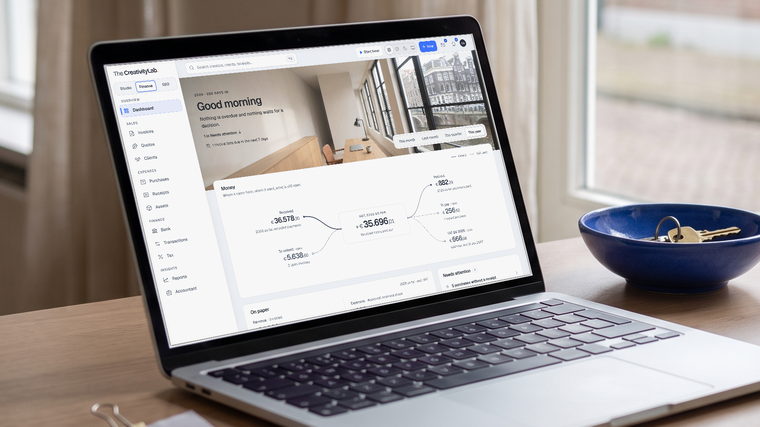
CalcAI, Kassabon.ai, Roosty and GhostID: designed, built and run by the Lab, each with its own case.
CasesCustom automations and dashboards that clear
the busywork and free your team for real work.
We design the systems that carry your daily operations. Connected to the tools you already run on, quietly removing busywork, and proving their value in numbers you can check.
Who we are
We work with growth-stage companies and ambitious teams that are done experimenting for its own sake and want operations that simply run.
0
CalcAI, Kassabon.ai, Roosty and GhostID: designed, built and run by the Lab, each with its own case.
Cases0
Every request gets a reply within 24 hours, from the person who would build it.
Reply0
You talk to the person who designs and builds it. No account manager, no handover.
Direct“The tools were never the problem. The missing system is.”
Services
No one-size-fits-all packages. Every system is shaped around your workflows, the tools you already use, and the outcomes that move your bottom line.
See case studiesWe find where AI can create real leverage in your business, then design a practical roadmap to make it happen.
We automate the repetitive work between your tools, so processes keep moving and nothing slips between systems.
AI agents that understand your business, work across your systems and know when to act, answer or hand over to a human.
We turn scattered business data into live dashboards, automated reporting and intelligence your team can actually act on.
Custom portals, tools and operational platforms built around the way your business actually works.
Intelligent systems that capture opportunities, personalise communication and turn attention into measurable pipeline.
How it works
No black boxes, no vague timelines. Every project follows the same clear route, so you always know where things stand.
Get in touchA deep-dive into your business, your workflows, your tools, your team, and your biggest bottlenecks.
Before anything gets built you get a complete plan. What we build, why, in what order, and what to expect.
We build your systems and wire them directly into the tools your team already uses every day.
Going live is the start, not the end. We watch performance, gather real data, and keep refining.
After
Before
What actually changes when the
system carries the repeatable work.
Well-built systems disappear into your existing operations and start delivering results from day one.
What we build
AI automation, intelligent dashboards, agents and custom business tools, designed around the way your company actually operates.
“AI should make your business simpler, not give you another system to manage.”View the case studies
Case studies
Every case below is a system the Lab designed, built and runs itself: own products, lab projects and internal tools, each labeled for what it is. Numbers only, no fluff.
All case studies
AI quote engine for Dutch trades
Automation · 2026
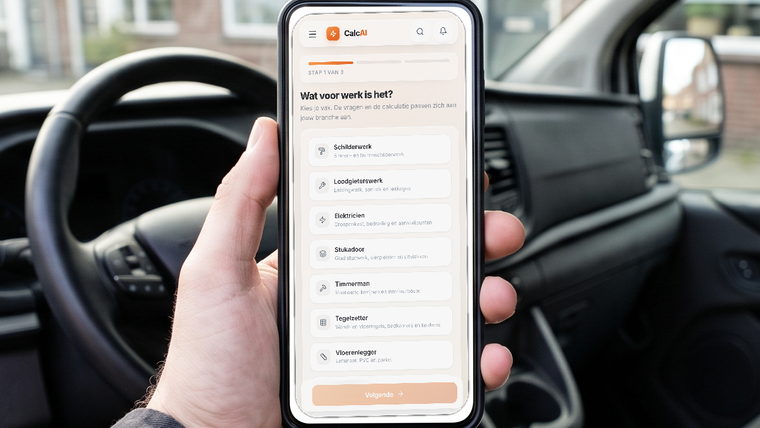
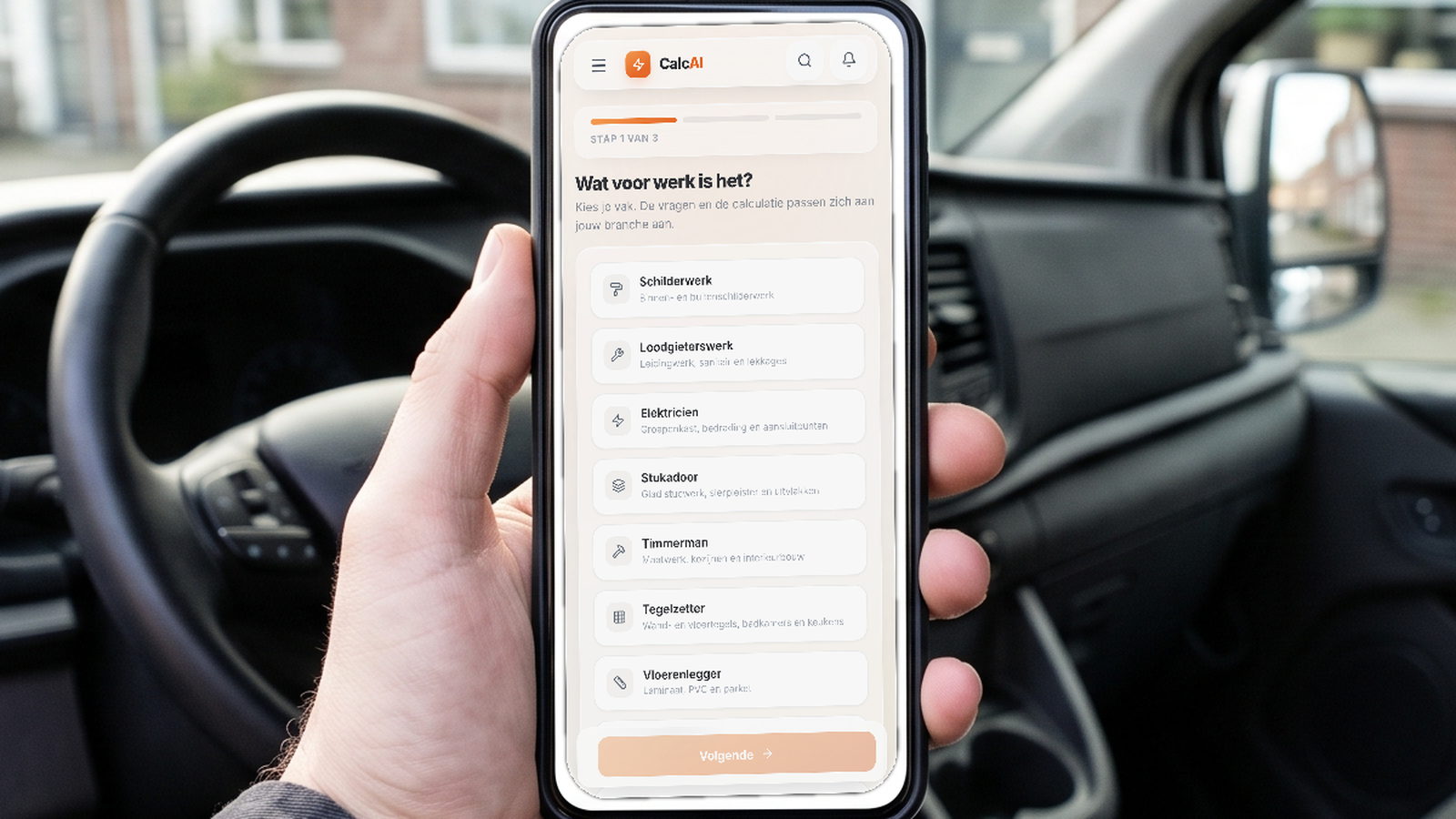
A job description typed in plain language leaves as a finished, branded PDF quote.
19 industry engines47 reconciled variants in the test suiteHuman sends every quote
Receipt, warranty and claim assistant
Automation · 2026
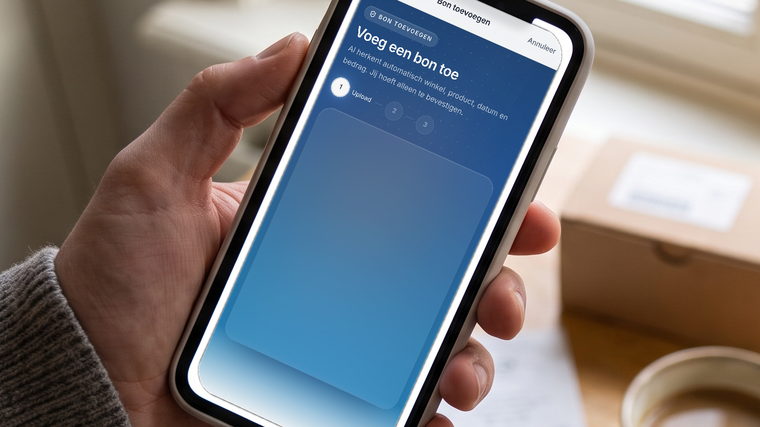
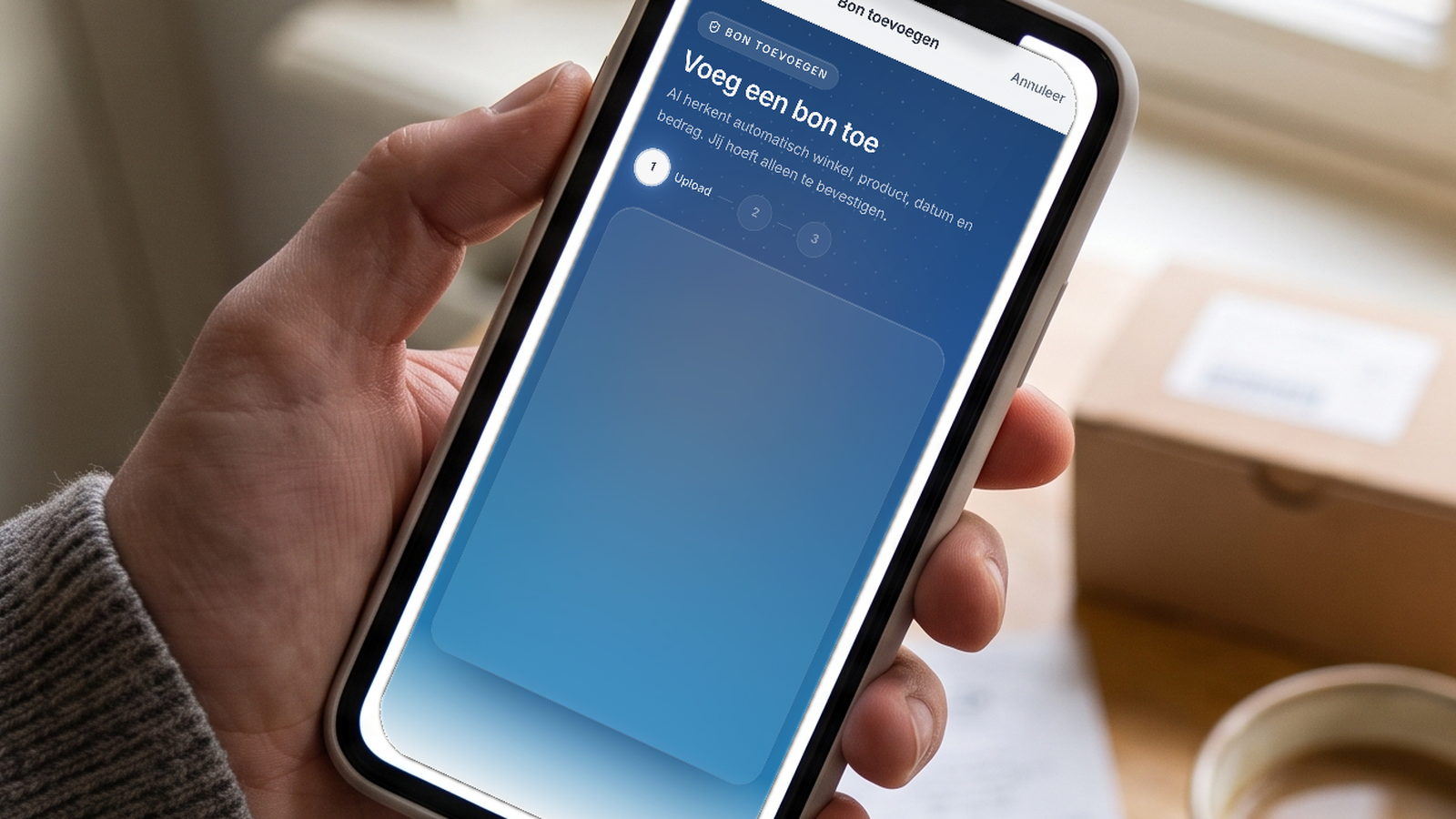
Upload a receipt: the warranty date is kept and the claim letter is drafted for you.
4-layer extraction, deterministic before the modelReminders queued at 30, 14 and 3 daysClaims stay drafts until you send
Staff scheduling for multi-venue hospitality
Dashboards · 2026
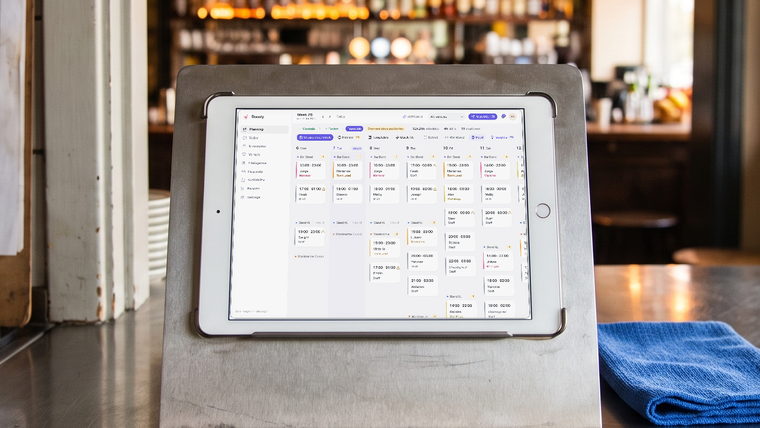
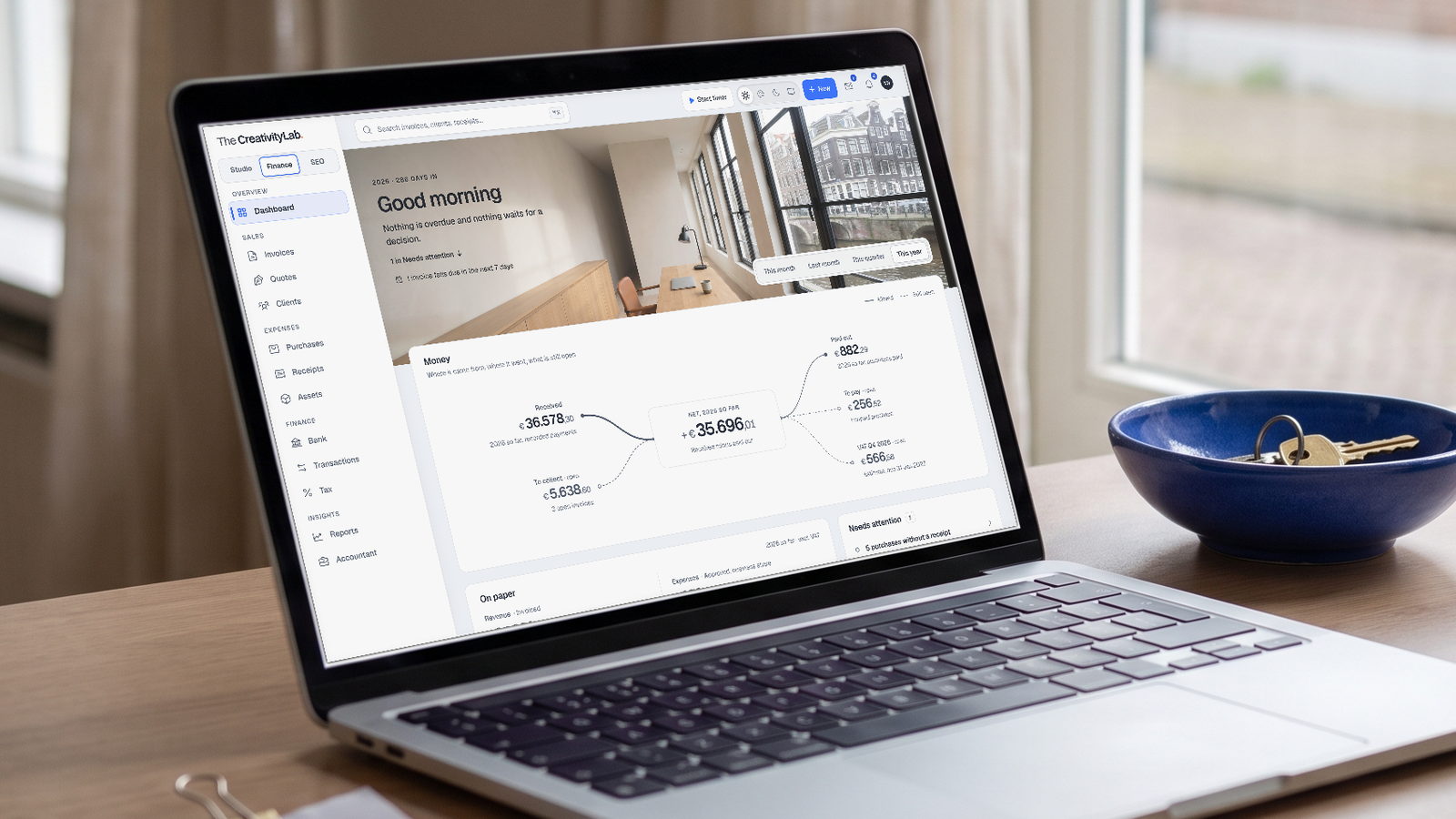
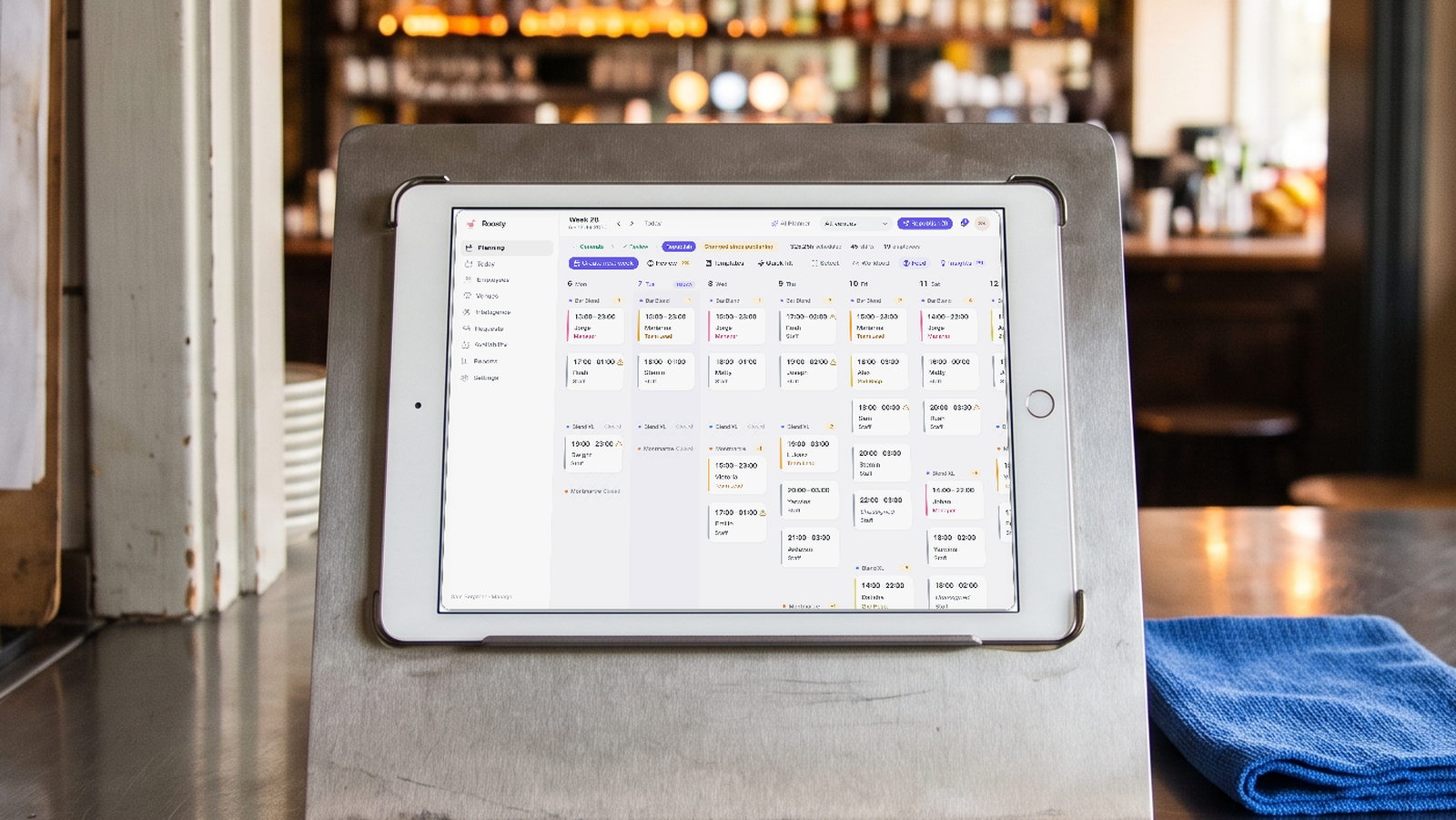
A weekly board that replaces a spreadsheet roster and recalculates as you drag.
7 conflict rules, 4 of them blocking before publishOvernight shifts counted correctlyMulti-tenant backend, row-level security
Personal privacy control layer
Integrations · 2026
A browser extension that shows what a site really asks for, before you agree.
450+ automated tests18 tables, RLS enabled and forced, EU-hostedSigned, device-bound entitlementsTestimonials
Reviews from businesses the studio built for. Real names, real projects, quoted as written.
Get in touchFAQ
You have questions before committing to anything. Here are the ones we hear most.
If there is work that goes the same way every week, yes: retyping data, answering emails, passing on requests, updating reports. That work is predictable, and predictable work can be handed over. If in doubt, the first conversation shows it: we walk through your week and point at where the hours go.
Half an hour about how your business runs today, no slides. We ask questions, you tell us where it grinds. You leave with at least two concrete opportunities, even if we never work together.
No. We design, build and connect everything and teach your team the parts they touch. If you do have developers, we are happy to work alongside them.
Usually within two weeks of the conversation. We start small, with an audit and one or two automations, so you see the effect before building further.
Access to the tools you use today, one point of contact on your side, and an hour a week for check-ins in the first weeks. That is all. You do not need documentation; we write it.
No. Most clients are growing companies of ten to a hundred people: big enough to suffer from manual work, small enough to decide quickly. What matters is that there is something to gain.
Automation follows fixed rules: if this, then that. An agent can read, weigh and choose, for example understand an email and decide the right next step. Often plain automation is enough, and we say so.
The ones you already use. We build on top of your current systems, such as your CRM, accounting, mail and planning, and connect them through APIs and webhooks. New tools only come in when they clearly add something.
A first automation usually runs within two to four weeks. Larger systems such as a connected back office or a dashboard environment take six to ten weeks, in visible weekly steps.
You do. Everything runs in your accounts, under your control, fully documented. You can stop at any time without anything grinding to a halt.
Data stays in your environment and within the EU wherever possible. We use only what a task needs, record which AI models see what, and never use client data to train models. A data processing agreement is part of every engagement.
Every system has monitoring and alerts, so we often see it before you do. Maintenance and adjustment are part of the work. If a tool or a process changes, we adapt the system.
That depends on what you have built and how much is attached to it. We work with a fixed scope per step, so you know up front what you get and what it costs. In the first conversation we give an honest indication based on your situation.
Because systems get better with attention. In a monthly format we stay responsible for the outcome, not just the delivery. A one-off project is possible too, for instance for one well-defined automation.
Yes, and we recommend it. The audit plus one or two automations is the natural start: you see the effect, then you build on.
Usually within a few months. We work out beforehand how many hours or errors a system removes, so you know the payback time before we start. If the sum does not add up, we say so.
No. No long contracts, no licences that only run through us. Everything is in your name, so you can always continue yourself or bring in someone else.
We name them up front. Some tools and AI models charge per use; that is separate from our work and goes into the scope, with an estimate of the monthly amount.
Every system gets a number before we start: hours saved, response time, conversion, error rate. We report against that, not against activity.
Then we adjust. Monitoring catches deviations early and refinement is part of every plan. If something structurally delivers too little, we say so and switch it off.
By building it into the tools the team already has open and by taking it into use together. A system nobody uses does not count as delivered.
The work that needs judgement: customers, decisions, exceptions. Automation removes the repetition, not the responsibility. Wherever it matters we build in a human check.
Yes. Everything is documented and built in tools your team can understand. Small changes you make yourself; bigger ones we take on together.
That is when it starts. We follow the numbers, improve where it pays and build on when the next process is ready. You have one point of contact and a fixed check-in.
Still have a question that isn’t answered here?
Book a 30-minute call and ask us directly.
Journal
Practical writing on AI automation, agents and dashboards: what works, what it takes and when to wait.
All articlesWe build systems that quietly take over work. One conversation is enough to see where it starts for you.
AI Strategy and Consulting
An honest audit of your workflows: which parts repeat, which need judgement, and what to build first. Sometimes the answer is plain automation. Sometimes it is a better process. We tell you which, in writing, before anything is built.
When this fits
What you get
How we work
What we ask of you: access to the tools you use today, one point of contact on your side and an hour a week for check-ins in the first weeks. You do not need documentation; we write it.
Real projects
Every product the Lab built started with the same map of one workflow: quoting for CalcAI, receipts and warranties for Kassabon.ai, weekly scheduling for Roosty. The cases show where the line between system and person ended up.
See AI automation for what usually gets built first. See AI agents when the work needs reading and judgement.
AI Automation
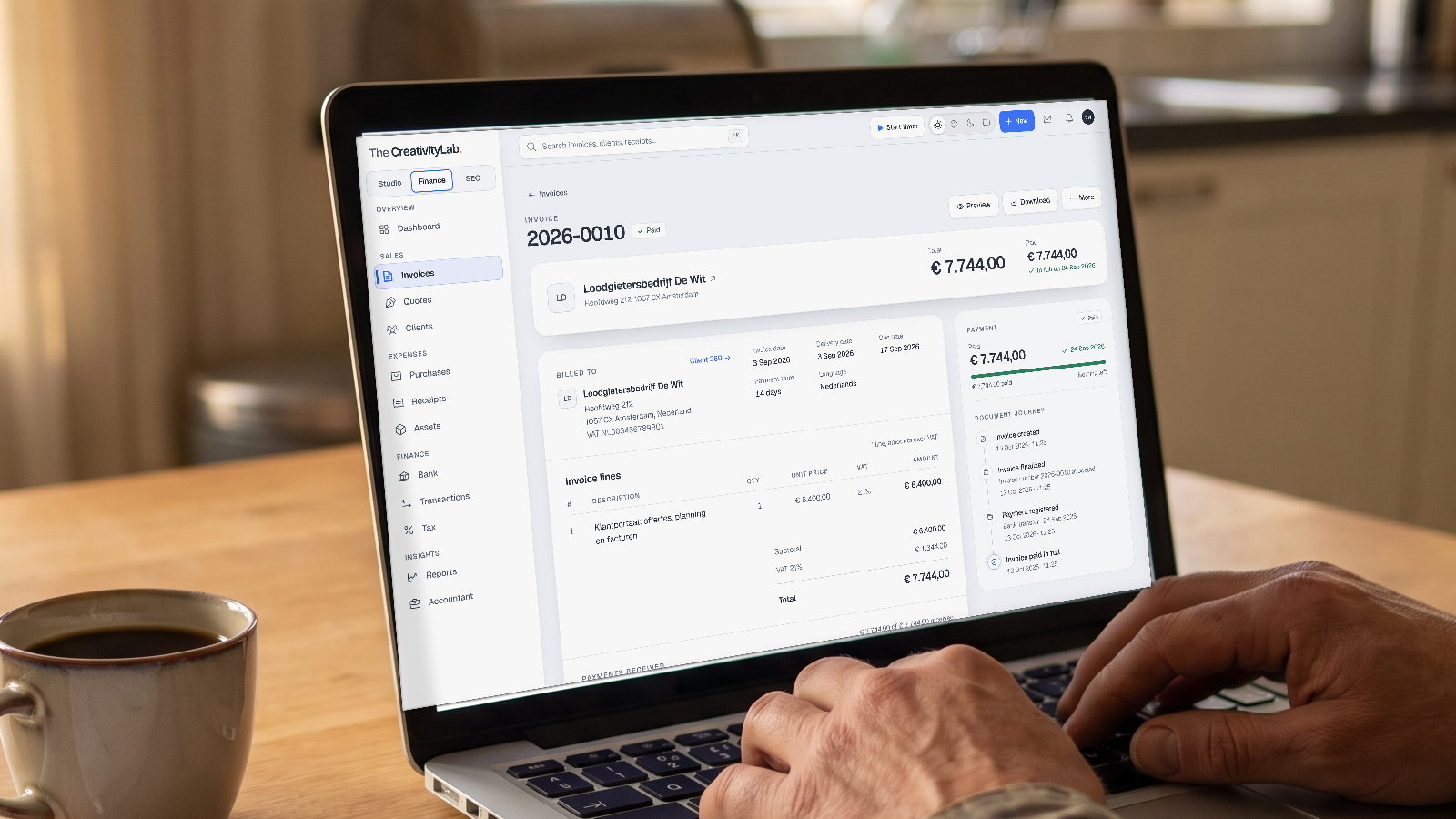
Workflows that move work between the tools you already use: enquiries, documents, follow-ups, records. AI reads what needs reading, rules do the rest, and exceptions go to a person with context. For companies of ten to a hundred people that run on a stack of tools.
When this fits
Which processes we automate
The phrase most people search for is automating business processes, and in practice it is nearly always one of four families. Intake: an enquiry, an order or an application arrives by mail, form or portal and has to become a complete record in your own system without anybody retyping it. Documents: invoices, packing slips, contracts and receipts that have to be read, checked against what you expected and filed. Follow-up: the message that has to go out on day two, day seven and day thirty whether or not somebody remembers. And reporting: the numbers that are currently assembled by hand on a Friday afternoon.
What makes this intelligent automation rather than a stack of rules is only the reading. A model is good at turning a messy sentence, a scan or an unstructured mail into structured fields. It is not good at deciding, and we do not ask it to. Rules decide, the workflow platform moves the work, and anything outside the pattern goes to a person with the whole context attached instead of into a log nobody opens.
When something else fits better
Not every repeat is worth automating. If a step happens twice a month, if the rules change faster than they can be written down, or if the whole process lives in one person’s judgement, a workflow will cost more than it saves and we will say so. Sometimes the real answer is that two systems should simply be connected, or that a form should ask three more questions. Those are cheaper projects and we would rather do the cheap one well than sell the expensive one.
What you get
What decides the size of the project
We do not publish rates, because the same request costs very different amounts depending on things you can name in twenty minutes. What moves it: how many steps the workflow has and how many of those are exceptions; how many systems have to be connected and whether they offer a decent API or only a login screen; how clean your data already is; whether one team uses this or five; and how much of the checking has to stay human because a mistake is expensive. What barely moves it is the model. We agree a fixed scope for the first step after the first conversation, so you know what you are committing to before anything is built, and the step after that stays a separate decision.
How we work
What we ask of you: access to the tools you use today, one point of contact on your side and an hour a week for check-ins in the first weeks. You do not need documentation; we write it.
Real projects
CalcAI turns a job description into a finished quote: a language model drafts the lines, a calculation engine recomputes every number, and the owner presses send. Kassabon.ai reads a receipt, watches the warranty date and drafts the claim you send yourself. Both are products the Lab built and runs.
See AI strategy if you are not sure where to start. See growth systems for the follow-up after intake.
Frequently asked questions
AI Agents and Chatbots
Chat, voice or email: the agent answers the common questions, takes the details, does the structured work and hands the rest to a person with full context. Handoff is designed in, not bolted on. And when plain automation is enough, we say so.
When this fits
Having a chatbot built
Most of the time the question is simpler than the word agent suggests: you want a chatbot on your own site that answers the twenty questions that arrive every day. We train it on material you already have, the pages on your site, the documents your team uses and the replies you have sent before, and we write down what it may answer and where it stops. When it does not know, it says so and passes the conversation on with everything it found, instead of guessing. It runs on your own site and in the channels you already use, in your own accounts.
Customer service, or taking action
A customer service chatbot answers. An agent also does something: it looks up an order, books a slot, opens a ticket, sends a confirmation. That difference decides what has to be arranged. Answering needs good material and a clear boundary. Acting needs access to a system, a limit on what may be changed, and a record of what happened. We usually start with answering, because it can be live in weeks and the transcripts show which questions really arrive, and we add actions once those transcripts say which ones are worth it. When fixed rules would do the same work without a model, we say so and point you at AI automation instead.
Where this fits, per kind of business
What arrives in the inbox decides more than the industry does, but the patterns repeat. Agencies and advertising agencies usually want a virtual assistant pointed inward rather than at the client: something that finds the brief, the last version and the agreed rate card while somebody is still on the phone, and drafts the status mail nobody wants to write on a Friday. Professional services want the opposite, an assistant on the public side that answers the twenty questions before anybody has to be booked in. Hospitality and care want availability and rebooking handled without a queue, and there the agent has to be allowed to act rather than only to answer. Installation and trade businesses want the intake complete before a van is scheduled: what, where, which brand, which photo. The same machinery every time, a different boundary every time, and the boundary is the first thing we write down.
What you get
What decides the size of the project
We do not publish rates. What moves the number: how many questions the agent has to cover and how well the answers are written down today; whether it only answers or also acts, because acting means access, limits and an audit trail; how many channels it lives in; how many languages; and how much of your material has to be cleaned before it can be used at all. That last one is the surprise in most projects and it is worth an honest hour before anything is agreed. We scope one step at a time and fix that step before we build, so the step after it stays a decision rather than an invoice.
How we work
What we ask of you: access to the tools you use today, one point of contact on your side and an hour a week for check-ins in the first weeks. You do not need documentation; we write it.
Real projects
In CalcAI a language model drafts a quote from a plain-language job description and a person checks and sends it. In Kassabon.ai an assistant drafts a warranty claim under consumer law that the user sends. Both show the split we build into every agent: the model proposes, the engine or the person decides.
See AI automation when fixed rules are enough. See AI strategy if you want the workflow mapped first.
Frequently asked questions
Data and Dashboards
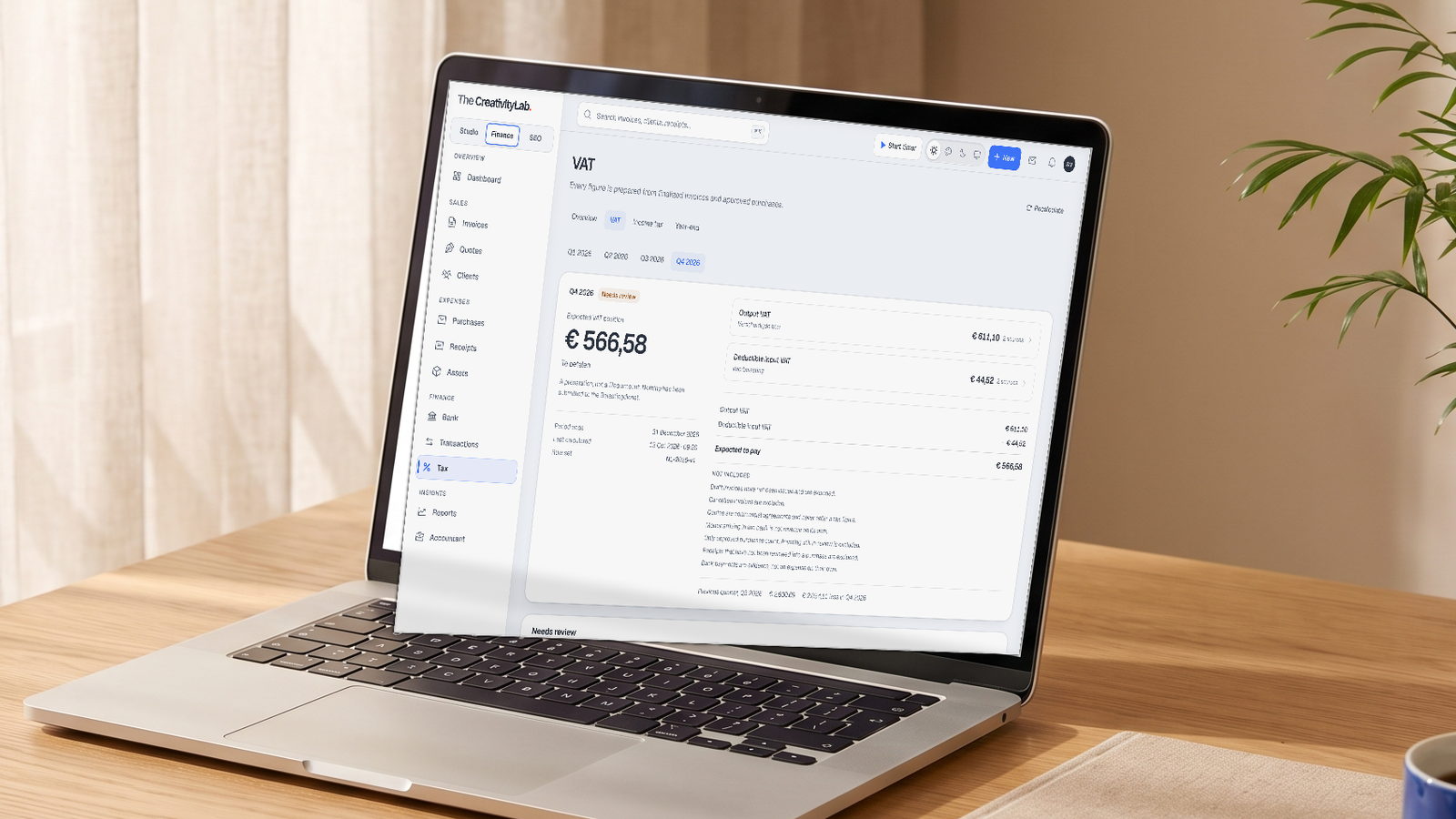
One live view over the numbers you already have, from your CRM, accounting, planning, shop and spreadsheets. Sources connected, refreshed automatically, no manual reporting. An alert when a number moves outside its range. Reading it and acting on it stays with you.
When this fits
What you get
How we work
What we ask of you: access to the tools you use today, one point of contact on your side and an hour a week for check-ins in the first weeks. You do not need documentation; we write it.
Real projects
Roosty is a live week board for hospitality venues: drag a shift and occupancy and conflicts are recalculated on the spot, with the planner keeping the last word. The dashboard demo is a read-only environment with sample data, so you can see what a live view looks like before anything is built.
Need one connected back office rather than a dashboard? See business systems A portal where your own customers log in is a Studio project: see client portals and web applications. See AI strategy if you want the questions settled before the screens.
AI-Powered Business Systems
Internal business systems and back-office platforms built around the way your business actually works: one operational core instead of five loose tools, a planning board instead of a spreadsheet, a first version of your own product. Everything runs in your accounts, under your control, fully documented.
When this fits
What you get
A portal where your own customers log in is a Studio project: see client portals and web applications
How we work
What we ask of you: access to the tools you use today, one point of contact on your side and an hour a week for check-ins in the first weeks. You do not need documentation; we write it.
Real projects
Roosty is a staff scheduling system for venues with more than one location. GhostID is a privacy control layer built local-first, with its own setup for accounts, security and payments, still in development. CalcAI is an application with its own calculation engine for nineteen trades. All three were designed, built and run by the Lab.
See dashboards for the live view on top of a system. See AI automation for the steps between the tools you keep.
AI Growth Systems
Capture, qualify, route, follow up. The system remembers and prepares; your team chooses when to pick up the phone. Attention stops leaking, and the pipeline becomes something you can see. Usually the second build, after intake and administration are automated.

When this fits
What you get
How we work
What we ask of you: access to the tools you use today, one point of contact on your side and an hour a week for check-ins in the first weeks. You do not need documentation; we write it.
Real projects
No client growth numbers are published here: we have not measured them in a way we would defend. What we can show is the intake and follow-up logic inside the Lab's own products, and the article that walks through sales, follow-up and scheduling as one connected flow.
See AI automation for the intake and administration that usually come first. See AI strategy if you want the order settled.