



AI Agents and Chatbots
A chatbot or agent that knows when to act,
and when to hand over.
Chat, voice or email: the agent answers the common questions, takes the details, does the structured work and hands the rest to a person with full context. Handoff is designed in, not bolted on. And when plain automation is enough, we say so.
When this fits
- The same twenty questions arrive by mail, chat and phone, every day.
- Enquiries are answered the next day, and the fastest competitor wins the job.
- Your knowledge lives in documents and in heads, and nobody searches either.
- A chatbot was tried once, answered vaguely and was switched off.
Having a chatbot built
Most of the time the question is simpler than the word agent suggests: you want a chatbot on your own site that answers the twenty questions that arrive every day. We train it on material you already have, the pages on your site, the documents your team uses and the replies you have sent before, and we write down what it may answer and where it stops. When it does not know, it says so and passes the conversation on with everything it found, instead of guessing. It runs on your own site and in the channels you already use, in your own accounts.
Customer service, or taking action
A customer service chatbot answers. An agent also does something: it looks up an order, books a slot, opens a ticket, sends a confirmation. That difference decides what has to be arranged. Answering needs good material and a clear boundary. Acting needs access to a system, a limit on what may be changed, and a record of what happened. We usually start with answering, because it can be live in weeks and the transcripts show which questions really arrive, and we add actions once those transcripts say which ones are worth it. When fixed rules would do the same work without a model, we say so and point you at AI automation instead.
Where this fits, per kind of business
What arrives in the inbox decides more than the industry does, but the patterns repeat. Agencies and advertising agencies usually want a virtual assistant pointed inward rather than at the client: something that finds the brief, the last version and the agreed rate card while somebody is still on the phone, and drafts the status mail nobody wants to write on a Friday. Professional services want the opposite, an assistant on the public side that answers the twenty questions before anybody has to be booked in. Hospitality and care want availability and rebooking handled without a queue, and there the agent has to be allowed to act rather than only to answer. Installation and trade businesses want the intake complete before a van is scheduled: what, where, which brand, which photo. The same machinery every time, a different boundary every time, and the boundary is the first thing we write down.
What you get
- Custom AI agents and assistants. Built on your own material and running in your own accounts, not a template with a generic brain and your logo on it.
- Internal knowledge assistants. A virtual assistant for your own team that searches the documents, the projects and the earlier replies nobody has time to open.
- Customer service agents. The twenty questions that arrive every day, answered in your own words, in the channels people already use.
- Lead qualification agents. An enquiry that arrives complete and sorted, with the follow-up already scheduled, instead of a one-line mail at eleven at night.
- Tool-using and action-taking agents. Looking something up, booking a slot, opening a ticket, sending a confirmation, inside limits you set.
- Human handoff and escalation. The written boundary, the moment it stops, and the person who receives the conversation with everything that was asked and found.
What decides the size of the project
We do not publish rates. What moves the number: how many questions the agent has to cover and how well the answers are written down today; whether it only answers or also acts, because acting means access, limits and an audit trail; how many channels it lives in; how many languages; and how much of your material has to be cleaned before it can be used at all. That last one is the surprise in most projects and it is worth an honest hour before anything is agreed. We scope one step at a time and fix that step before we build, so the step after it stays a decision rather than an invoice.
How we work
- First conversation. Half an hour about how your business runs today, no slides. You leave with at least two concrete opportunities, even if we never work together.
- Audit and first build. We map the workflow, agree a fixed scope for one step and build the first agent within two to four weeks, trained on your own material, in the tools you already use.
- Live, with monitoring. Every system gets a number before we start (hours saved, response time, error rate), monitoring and alerts, and a human check wherever it matters.
- Yours, documented. Everything runs in your accounts, under your control, with documentation and a data processing agreement. You can stop at any time without anything grinding to a halt.
What we ask of you: access to the tools you use today, one point of contact on your side and an hour a week for check-ins in the first weeks. You do not need documentation; we write it.
Real projects
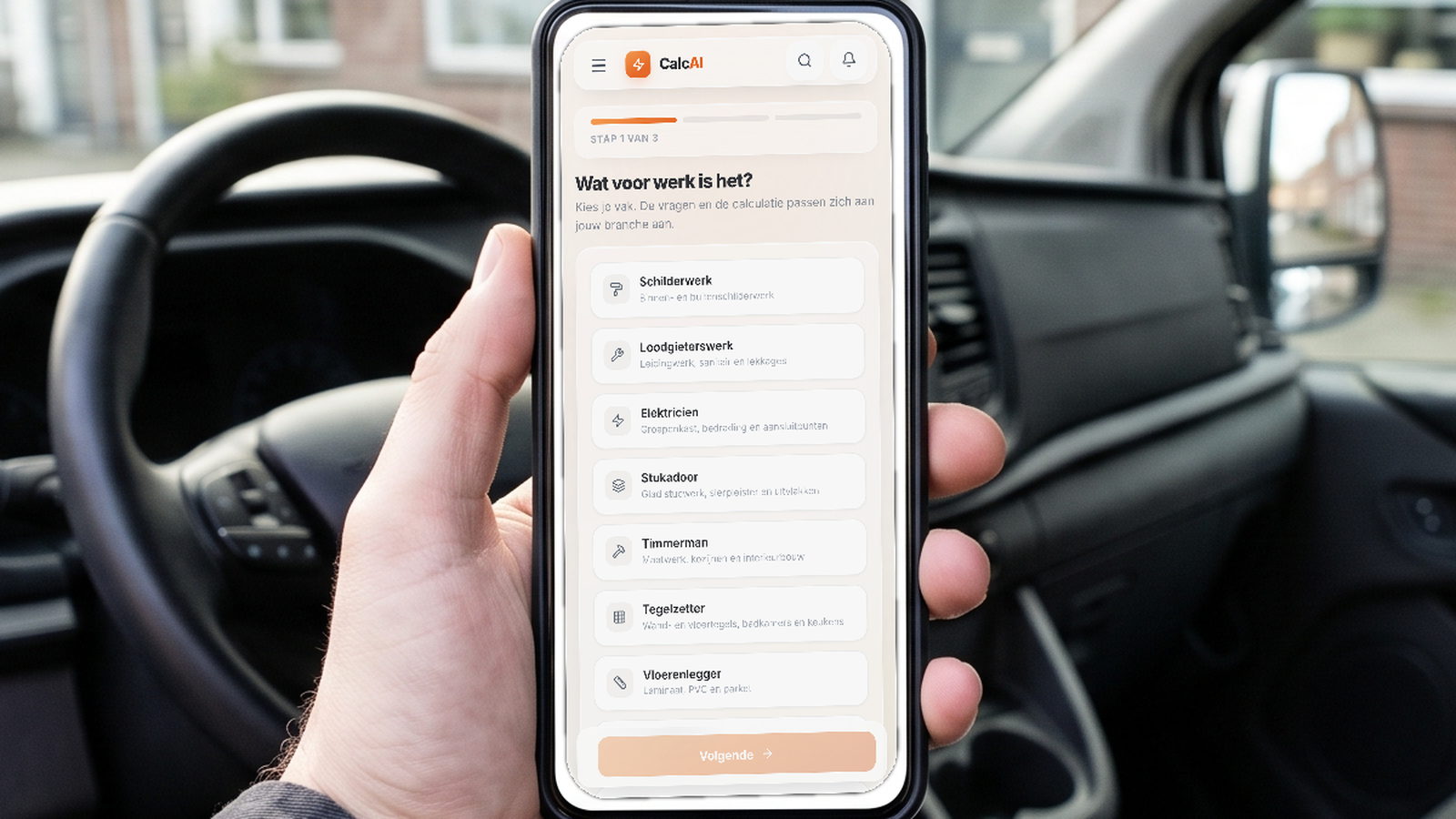
In CalcAI a language model drafts a quote from a plain-language job description and a person checks and sends it. In Kassabon.ai an assistant drafts a warranty claim under consumer law that the user sends. Both show the split we build into every agent: the model proposes, the engine or the person decides.
See AI automation when fixed rules are enough. See AI strategy if you want the workflow mapped first.
Frequently asked questions
- What is the chatbot trained on? Your own material: the pages on your site, the documents your team already uses and the replies you have sent before. We agree which sources count as the truth, so every answer can be traced back to one of them.
- What happens when it does not know the answer? It says so and hands over. A person receives the conversation with everything that was asked and found, so nobody starts cold. The boundary is written down before we build: complaints, money and anything unusual are not the agent’s call.
- Can it work in the tools we already use? Yes. It runs in your own accounts and connects to what you have: the website, the mailbox, the calendar, the CRM. You do not move to a new platform for this.
- How long before a chatbot is live? A first version usually takes two to four weeks once the scope is agreed and we have access to your material. We start with one channel and one set of questions rather than everything at once.
- Is an AI agent the same thing as a virtual assistant? People use the words for the same thing and we do not fight that. The distinction worth keeping is between answering and acting. Something that only answers needs good material and a clear boundary; something that acts also needs access to a system, a limit on what it may change and a record of what it did. We say which of the two your question really is, because the second is a bigger build.
- Does it work in Dutch as well as in English? Yes. What decides the quality is not the language of the model but the language of your material: an agent answering from English-only documents will sound translated in Dutch. We check which of your sources exist in which language before we agree what it may answer.
- We already have a chatbot that does not work. Can it be replaced? Usually yes, and the reason it failed is worth an hour of reading. Most of the time the model was not the problem: there was nothing to answer from and no handover, so it guessed or dead-ended. We read the transcripts first.
