











A site that decides for the visitor.
Positioning and structure first, then a hand-built site your team can keep editing.
What we offer

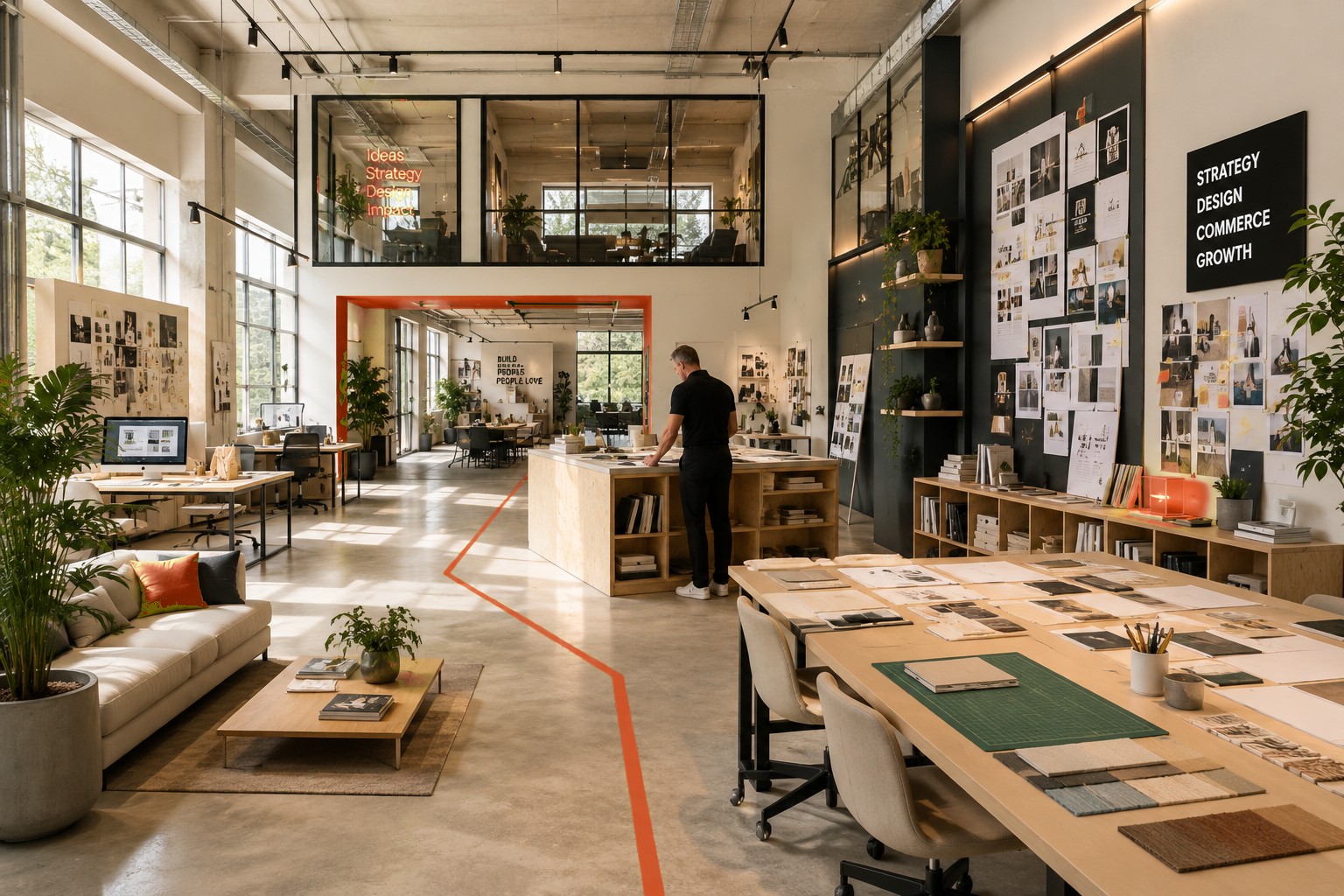
A creative studio in Amsterdam. From the first conversation to a launched site, store or app.
Before
After
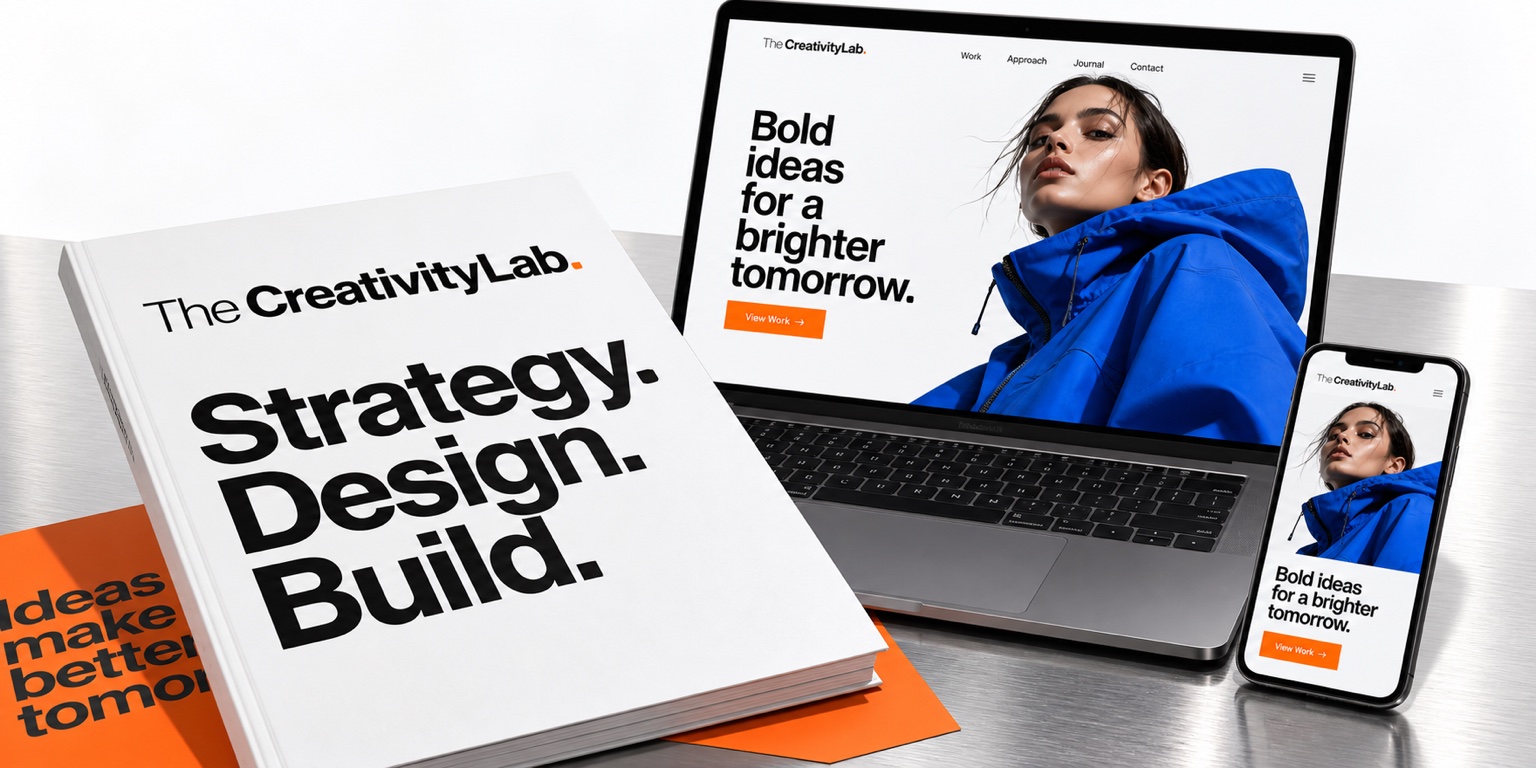
Strategy, design and build in one studio. We take an idea from the first sketch to a live site, store or app, and stay on it after launch.
Positioning and structure first, then a hand-built site your team can keep editing.
What we offer
We build the storefront, the checkout and the flows around them, on Shopify or fully headless when the brand needs its own front end.
What we offer

Booking, planning, portals and internal tools. We define the version that is already worth using, ship that, and let real use decide what comes next.
What we offer

What you sell, who decides, and the structure that fits how people actually search. Sometimes the honest answer is a smaller project.
What we offer

Sites are usually left alone the day they go live. We keep measuring, fixing and cutting whatever is not earning its place. Month to month after the first quarter.
What we offer

You work directly with the person designing and building the project. No layers, no handoffs.
Every project is built around the outcome that matters most, whether that is enquiries, sales or a better product.
Launch is not the finish line. We can keep refining the experience as the business grows.
You work directly with the person
shaping and building the work.
No layers. No handoffs.

“If you’re looking for a fresh perspective and modern design, Kick is your guy.”
Amazing work and very helpful throughout the building of our website. Very creative and inspiring ideas.
“From the very first conversation, he understood our vision and delivered a website that perfectly reflects the energy and identity of MainStage Pride Amsterdam.”
“What you need for a perfect, most functional and detailed website. Professionalism and care for details is what describes their service best. Highly recommended.”
“Extremely professional. Every task he handles, he does with exceptional skill and expertise. If you want high-quality service, he’s absolutely the right person.”
We are a digital studio from Amsterdam. From web design in Amsterdam to webshops and apps, we design and build for business owners who take it seriously. Strategy, design and engineering under one roof, so you never have to stitch three parties together. And if you like, we stay on board once you are live.
Companies that are growing and notice their website has stopped growing with them. From a deli with a webshop to a tour operator with a booking system. Your size does not matter to us. Whether you want it done right does.
With Kick, and with the people he brings in when your project calls for it. No account manager in between. The person you have the first conversation with is the same person who walks you through the design and answers your questions.
Short lines and one person who sees the whole picture. Strategy, design and build live in one head here, so nothing gets lost between departments. And we say it plainly when something is not a good idea, even if it was your idea.
Yes, and deliberately so. In our AI LAB world we build automations, dashboards and agents. For a website it mostly means we can sketch and test faster, so the time goes to the things only people do well: making choices, and taste.
Both. Most projects run perfectly well remotely, with a few good conversations at the moments that matter. If you are nearby, we are happy to come over. A good coffee helps a good briefing.

More questions? Reach out anytime.
hello@thecreativitylab.nlLessons, frameworks and honest takes on what it actually takes to grow online.
Contact
Kick BaronCreative Directorhello@thecreativitylab.nl
Web Design
For a company, a shop or a venue that needs a site that explains, convinces and takes the enquiry. Brand, content, usability and technology are designed together, so it works on desktop and on the phone, and your team manages the content afterwards.
When this fits
A new website is not always the cheapest answer, and saying so is part of the job. If your site is only a couple of years old and its structure still matches what you sell, the work is usually content, speed and the route to an enquiry rather than a rebuild. If most of what you need is a range with prices, variants and a checkout, the shop is the project and the site follows from it. And if the thing people open is a form, a calendar or an account rather than a page, you are looking for an application rather than a website: that is where booking systems, client portals and internal tools belong.
See ongoing growth See having a webshop built See apps and web applications
The studio is in Amsterdam. Most projects run remotely, with a few conversations in person when that actually helps, and you work with the people who design and build the site rather than with an account manager in between. Being in the same city mainly changes how often we can sit at one table; it does not change the way the work is done.
One of the sites in our work was built for the city itself: MainStage Pride Amsterdam, a festival stage announced on a single page with a portrait poster screen at the venue. We work just as happily with a client on the other side of the country, and we say so up front when a visit adds nothing.
People look for this in different words: having a website built, a website builder, a web design agency in Amsterdam. Underneath them sits one question, who takes responsibility for the whole thing, from the first sentence on the homepage to the page that has to load on a phone on the train. In this city that usually comes down to three options: a large agency with an account layer in between, a specialist who is excellent at one part of the job, or a small studio that walks the whole route with you. We are the third kind, and when one of the other two suits your project better we say which one.
A professional website is not a prettier template. It is a site where the offer is stated in words a visitor recognises, where the route to an enquiry is short, where the pages load fast on a phone on mobile data, and where your own team can change a sentence without opening a ticket. Those four things are decisions taken during design, not features bought afterwards.
It also means the structure is readable by a search engine and by the assistants people now ask instead of searching: real headings, real text on the page, one subject per page. If your current site keeps its answers inside images, sliders or a chat window, none of that can be read back to somebody looking for you.
How we work

Step 01 · Direction
Offer, audience and message reduced to one direction before anything is drawn. So we design from a choice, not from taste.

Step 02 · Design
Brand, content, usability and technology move together, on desktop and on the phone. Less searching, less doubt, a clearer path.

Step 03 · Build
Hand-written code, fast and accessible, without a pile of plugins. Your team edits the content afterwards without calling us first.
What you get
Beautiful at launch is not enough. The quality has to hold up afterwards too.
No theme and no pile of plugins. Every line has a reason, so the site stays light, fast and manageable.
Contrast, keyboard control and screen readers belong to the build, not to the finish afterwards.
Your team can safely change content without needing us for every edit.
Practical questions
It depends on the number of page types, how much of the content exists and the functions you need. We agree a fixed scope after the first conversation. Our article on what a website costs walks through the choices. Read what a website costs
Most sites take a few weeks to a few months. The pace is mostly set by content and decisions on your side, and we say up front what we need when.
Solara Red Sea Tours, an excursion site in several languages that takes enquiries, and MainStage Pride Amsterdam, a festival stage announced on one page. Both are live and both are in our cases. Solara Red Sea Tours MainStage Pride Amsterdam
Yes, that is how we build: your team changes text, images and pages without calling us. Speed, structure, titles and accessibility are part of the build, so the site can be found. Hosting runs in your own name; we set it up and hand over the keys. Afterwards, ongoing growth keeps it healthy. See ongoing growth
No. The studio is in Amsterdam and a good part of the work is for the city and the region, but projects run remotely just as well: the sites in our cases were built for clients in the Netherlands, Germany and Egypt. Where you sit decides how often we meet, not whether we can do the work.
Both, and we are honest about which one helps. The first conversation and the moment we agree the direction are worth doing face to face when you are nearby. The rest, design reviews and build, runs fine on a call with a link to look at together.
One person who decides, the content you already have (texts, images, product information) and an answer within a few days when we ask a question. We structure the content and write it with you; photography we plan together, with your own images where they are good and new work where they are not.
E-commerce
From assortment structure to checkout: a store that sells on the phone as well as on the desk, on Shopify or a fitting custom build, and that your team runs day to day without us.
When this fits
Selling to businesses is a different shop, not the same shop with a login. Customer groups see their own prices, an account holds the agreed terms, repeat orders start from an earlier order instead of from an empty basket, and paying on account has to sit next to the ordinary payment methods without breaking the checkout.
What that costs you in setup is mostly bookkeeping: which groups exist, who is allowed to order for a company, which prices are fixed and which follow a list, and how an order reaches your administration without being typed over by hand. We map that before we build, because it decides the platform more than the design does.
The studio is in Amsterdam and the shops we build are not: Harvest Deli sells over a counter in its own neighbourhood, Dangerous Street ships to Germany first and to the rest of Europe after that. What a shop close by does buy you is a short line, a table to sit at when a decision is stuck, and someone who can look at your actual counter instead of at a screenshot of it.
A webshop on your own domain also means the answers about your range live on pages of your own, in words a customer uses, rather than only inside a marketplace listing that belongs to somebody else.
How we work
Step 01 · Understand
Which products carry the shop, how people compare and choose, and where the current route loses them. That decides the structure before any page is designed.
Step 02 · Build
Collection pages, product pages with clear variants, a cart that stays out of the way and a checkout with no surprises. On the phone first, because that is where most people buy.
Step 03 · Hand over
Real orders end to end, payments and shipping connected, stock and content where your team already works. Then the shop is yours to run.
What you get
A shop is judged on the order after launch, not on the launch.
Product pages and checkout stay light, because a slow step is an abandoned cart.
Products, prices and stock are managed by your team in the platform, not by us.
A structure that takes new categories and variants without a rebuild.
Practical questions
Shopify when it fits the assortment and the team, a custom build when the buying route needs something the platform cannot do. We advise per shop, and we say so when the simpler option is the better one.
Harvest Deli, a neighbourhood deli on Shopify that keeps taking orders after the counter closes, and Dangerous Street, a streetwear store with Germany as its first market and the paperwork done properly. Havnly is a shop concept from our own lab. Harvest Deli Dangerous Street
Yes. Selling to businesses means customer groups with their own prices, an account that holds the agreed terms, repeat orders that start from an earlier order rather than from an empty basket, and paying on account next to the ordinary payment methods. Which platform carries that is decided by how your prices and your administration work, not by the design, so we map it before we build and we say where a standard platform stops. Read about platforms and choices
Usually yes. Products, customers and orders move over, and the old addresses get a redirect to the new page so the traffic you already earned does not land on an error. We check the redirect list before launch rather than after it, because that is the part that is expensive to repair later.
Yes, and it is more paperwork than code. For Dangerous Street we set up one checkout for all EU countries with German VAT, the registrations that selling to German consumers requires, and shipping and return rules per market. We tell you which of those are yours to sign and which we can arrange inside the build.
Yes. That is the point of the third step: products, prices, stock and content are set up where your team already works, and we hand over with the people who will use it.
We do not publish rates, because a shop with forty products and one payment method and a shop with four thousand variants in three languages behind an ERP are not the same job. What moves the number: the size of the assortment, how much of the product content already exists, the integrations you need, whether an existing shop has to move across, and whether you sell in one country or in several. That same list sets the calendar, together with how quickly product data and photography come back from your side. We map it in the first step and agree a fixed scope before we build. After launch the shop is yours; if you want us to keep measuring and improving the buying route, that is ongoing growth. See ongoing growth Read what drives the price
Apps and web applications
A booking system, a client portal, an internal tool, a SaaS product: software built around the one thing people open it for. In the browser when that is enough, as a native app for iOS and Android when the phone has to do the work.
When this fits
Taking a reservation on your own site instead of on a platform changes two things: the guest stays with you, and so does the commission. What has to be arranged is always the same short list. What is bookable, and in which unit: rooms, tables, seats, time slots or a guide. Which overlaps are forbidden, so two people cannot take the same slot in the same second. Whether the guest pays now, pays a deposit or settles afterwards. What the confirmation and the reminder say. And what the people behind the counter see when somebody calls to move it.
That list reads differently per business. A hotel or a B&B books nights and occupancy. A theatre or an event books seats against a capacity per performance. A restaurant books tables per time slot; a tour operator books guides and departure times. We build the version your business actually needs, either connected to the booking tool you already run or as a reservation system of your own, and we say which of those two is the cheaper answer in your case.
Most of the searching around this ends at a ready-made booking product, and for plenty of businesses that is the right buy: if a standard tool covers your calendar, your payments and your exceptions, buying it beats building it, and we will tell you so in the first conversation. Where we are the natural answer is the other half of the question, a website with a reservation system inside it, where booking is part of the site instead of a link to somebody else’s page. That is a booking module on your own domain, in your own design, with your own confirmation mail. And it becomes a reservation system built to order when the standard flow genuinely does not fit: several locations, staff or resources at the same time, rules that change per season, or a booking that has to land in the system your office already works in.
A web application you sell by subscription is a different job from one you use internally: accounts and roles, a plan and a payment that renews, an invoice trail your bookkeeper accepts, and a first version narrow enough to reach real users before the roadmap eats the budget. We build the smallest version somebody would actually pay for, in your own accounts and under your own name, and the product stays yours.
A custom web application is the right answer only part of the time. When an existing tool plus a couple of connections would do the same work, we say that in the first conversation, because it is cheaper for you and it keeps the project we do take on honest.
How we work
Step 01 · Scope
What the application must do perfectly, who uses it, whether it lives in the browser or on the phone, and what stays out of version one. A small, sharp first release beats a large vague one.
Step 02 · Develop
User flows and clickable prototypes first, then interface and code: a web application under your own domain, or iOS and Android, with the connections to the systems you already run, such as calendar, payments, CRM and accounting.
Step 03 · Release
Testing with real users and on real devices, going live under your own domain or through the App Store and Google Play, and a plan for the versions after the first.
What you get
An app earns its place by being opened again tomorrow.
In the browser it follows the web, on the phone it follows iOS and Android, so nobody has to learn it.
Tested with real users and on real devices before it goes live, not after.
Structured so version two builds on one, without starting over.
Practical questions
A web application when people use it at a desk or occasionally on the phone, and when it has to be found and shared by URL. A native app when people do one task on the phone often, need it offline, or use the camera, location or notifications. We tell you which one it is, and sometimes the answer is a good mobile website. See web design
Yes. There are three routes: connect an existing booking tool, build a booking flow on your own site, or refer to a platform. Which one fits depends on your calendar, your payments and the number of exceptions. A booking flow we build usually covers several locations or staff members, payment at the moment of booking, confirmations and reminders by email, and a view for the people behind the counter; Roosty in our AI Lab is the same thinking taken further, as a week board for hospitality venues. Our article on booking systems walks through all three routes. Read about booking systems
The slot is held the moment somebody starts the booking and released again if the booking is not finished, and the availability check runs on the server rather than in the browser. That is the boring half of a reservation system and it is the half that decides whether your staff trust it.
Both, and it can differ per type of booking: paying in full, a deposit at the moment of reserving, or nothing until they arrive. What you choose mostly depends on how often people fail to turn up and how easily you can fill an empty slot.
That depends on the number of flows in the first version, the systems it connects to and whether it launches in the browser, on both phone platforms or all three. Scoping is the first step for exactly that reason. Our article on web apps explains what drives the cost and the payback. Read about web apps and payback
The calendar is set by the scope rather than by us. What moves it: the number of flows in the first version, how many systems it has to talk to, whether it launches in the browser only or also through the App Store and Google Play, and how quickly decisions and content come back from your side. We agree the scope and the planning together after the first conversation, and we would rather name a date we can keep than one that sounds good on a Monday.
The applications we can show run in our AI Lab: Roosty, a staff scheduling board for hospitality venues, and Kassabon.ai, a receipt and warranty assistant, both live products with their own case page there. In this studio, the enquiry flow on Solara Red Sea Tours shows the same approach on a website. See Solara Red Sea Tours
You do. A web application runs under your own domain and accounts; a native app is published under your own developer accounts. We set them up with you and guide the review.
Digital Strategy
Positioning, audience, customer journey and priorities in one plan your team can act on. Sometimes the outcome is a smaller, sharper project than you came for.
When this fits
How we work
Step 01 · Research
How you sell today, who buys and why, what the current channels do and where they lose people. We talk to the people who do the work.
Step 02 · Decide
One positioning, the audiences that matter most, the customer journey and the content it needs. Choices, not a report that lists everything.
Step 03 · Roadmap
What to build, why, in what order and what it should change. Small enough to start next month, complete enough to plan a year.
What you get
A strategy is only as good as the Monday after.
Every page of the document ends in a choice, with the reasoning next to it.
If the answer is a smaller project than expected, that is what the roadmap says.
Delivered in a session with the people who will carry it out, not only as a file.
Practical questions
Usually a few weeks, depending on how many people we speak to and how much is already documented. You know the scope after the first conversation.
One document with the positioning, the audiences, the customer journey and a roadmap in order, plus a session with the people who will carry it out. Two examples of the kind of decision it leads to: Solara Red Sea Tours went from a brochure to a site that takes enquiries; Dangerous Street opened Germany first, with the paperwork done properly. Solara Red Sea Tours Dangerous Street
No. The roadmap is written so any team can execute it. If you do want us to design and build, it becomes the brief.
Then we test it against the audience and the channels, and sharpen the order of the work. That is often the faster route.
That depends on the number of audiences, channels and conversations. We agree a fixed scope after the first talk, before we start.
Ongoing Growth
For a site or shop that is live. Technical care keeps it healthy. Content and conversion work make it better. We do both, and we choose what deserves attention by looking at real use.
When this fits
How we work
Step 01 · Look
Where people arrive, what they do and where they stop, next to speed, errors and what has aged. Real behaviour, not opinion.
Step 02 · Change
The change with the best ratio of effect to effort first: a clearer page, a shorter form, a faster step. Small, frequent releases.
Step 03 · Review
Did it do what we expected? What did it change for people and for the numbers? That decides the next round.
What you get
The value is in the rhythm, not in one big fix.
Keeping the site healthy and making it better are two kinds of work, planned and reported apart.
We change what use shows, and we say why before we start.
Every change gets a look back, so the next one is better informed.
Practical questions
Maintenance keeps the site working: updates, speed, security, fixes. Improvement makes it work better: clearer pages, better conversion, new content. We plan and report them separately.
Updates and checks on speed, security and errors, one or two improvements chosen from real use (a clearer page, a shorter form, new content) and a short review of what changed and why. You see it in one monthly note.
From real use: where people arrive, what they do and where they drop off, next to what is slow or broken. The list is prioritised on effect against effort, and we explain the order. Our article on the five signs a website is costing you customers shows what we look for. Read the five signs
Partnerships run month to month after a first quarter. You see every month what was done and what it changed.
Yes, after a short review of the code and the setup, so we know what we are maintaining.
Tell us what you want to build. We think along on the approach, say honestly what it takes, and come back with a clear next step.


